
AI Engine Optimization (AEO): Structured Data for AI Answers
How to make your website easy for ChatGPT, Perplexity and Google AI to read and quote: a plain first paragraph, linked business details and pages that work without scripts.

More customers now ask a chat assistant for a recommendation instead of opening ten tabs. If the assistant cannot read your page clearly, you are not in the answer. AI Engine Optimization means making a page easy to quote: a first paragraph that defines what you do, structured data that connects your business to the person behind it, headings that state the claim, and text that arrives in the first response instead of after a script runs.
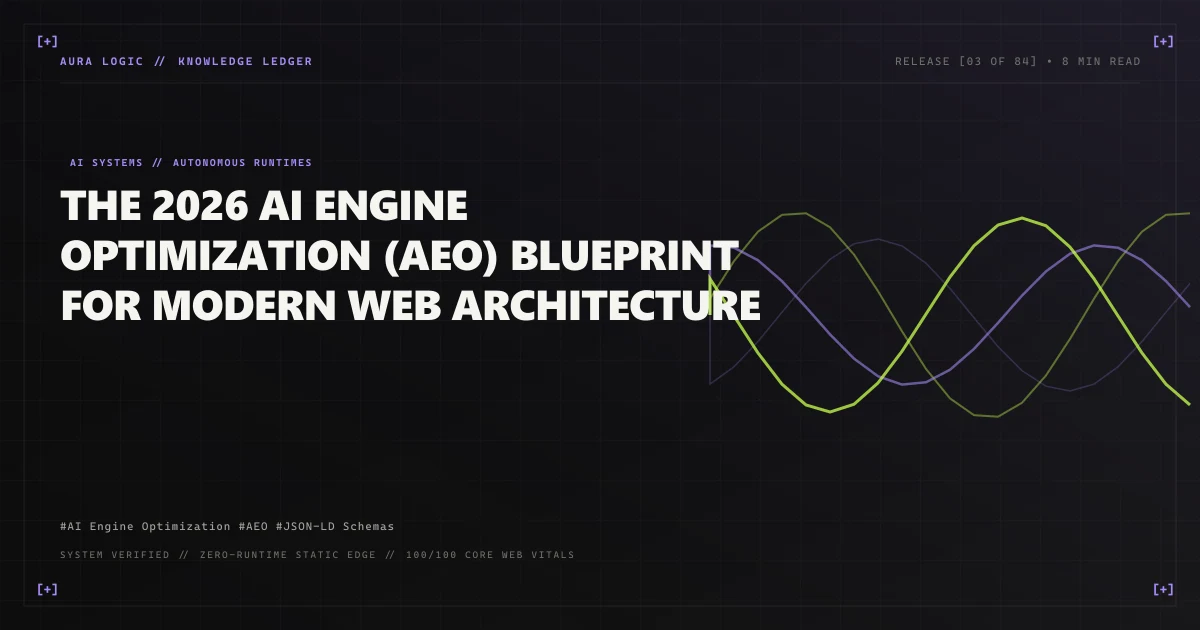
Where your customers are actually asking
More and more people now open a chat assistant before they open a browser tab. They ask for a recommendation, and the assistant answers with a short paragraph and a list of sources. If your business is not one of those sources, you are not in the conversation, and no amount of advertising, reputation or design work will put you there if the page cannot be read.
That is the whole idea behind AI Engine Optimization, usually shortened to AEO. It is not a trick and it is not a new ranking factor. It is the discipline of making a page easy for a machine to read, quote and attribute: a clear definition near the top, structured data that says who you are, headings that state the claim, and text that arrives in the first response instead of after a script runs.
1. Write a first paragraph that can be lifted out
An assistant quoting you wants a sentence it can repeat without changing the meaning. Many small business websites open with a paragraph that cannot survive that treatment. “Welcome to our company, where we bring passion to everything we do” contains nothing a machine can repeat, and nothing a customer can repeat either.
Write the opening paragraph as a definition, in three sentences:
- What you are, in plain words, with the service and the place in it.
- What it costs or takes, roughly, if you are able to say so.
- What you do that the next business in your category does not.
For Aura Logic that reads something like this: “Aura Logic builds websites for startups and small businesses, usually one to three pages, between $1,200 and $1,900 depending on scope. Projects run two to three and a half weeks. Every site is built as plain HTML on open standards, so it loads fast and the owner keeps the code.”
Three sentences. A customer can read them and understand the offer. A machine can lift them. The same paragraph does both jobs, which is why the discipline is worth the effort.
2. Give the machine two names and connect them
Search engines and assistants are better at matching things they can identify. Right now, a lot of small business websites give them one anonymous string, and a separate page somewhere gives a different string for the person who owns it. Nobody connects the two.
Structured data fixes that. It is a small block of text inside the page, invisible to visitors, that says what the things on the page actually are.
┌────────────────────────────────────────────────────────────────────────────────┐
│               TWO ENTITIES, ONE LINKED IDENTITY                                │
├────────────────────────────────┬───────────────────────────────────────────────┤
│ THE BUSINESS                   │ THE PERSON                                    │
├────────────────────────────────┼───────────────────────────────────────────────┤
│ type: Organization             │ type: Person                                  │
│ name: Aura Logic               │ name: Jorge Luis Jaime                        │
│ url: auralogic.dev             │ jobTitle: Founder                             │
│ logo, contact, sameAs links    │ worksFor: the Organization                    │
├────────────────────────────────┼───────────────────────────────────────────────┤
│ ONE LINK: the business points at the person, and the person points back.       │
│ Without it they are two unrelated names. With it they are one fact.            │
└────────────────────────────────┴───────────────────────────────────────────────┘
The block itself is small:
{
  "@context": "https://schema.org",
  "@graph": [
    {
      "@type": "Organization",
      "@id": "https://auralogic.dev/#organization",
      "name": "Aura Logic",
      "founder": { "@id": "https://auralogic.dev/#founder" }
    },
    {
      "@type": "Person",
      "@id": "https://auralogic.dev/#founder",
      "name": "Jorge Luis Jaime",
      "jobTitle": "Founder",
      "worksFor": { "@id": "https://auralogic.dev/#organization" }
    }
  ]
}
You can check this yourself. Open your home page, choose View Source, and search for application/ld+json. If there is nothing there, the machine is being told very little about you.
The sameAs links matter too. They point at the profiles you already have, such as a professional directory, a business listing or a review site, and they tell a machine that those profiles and your website are the same business. It is the cheapest credibility work available: a set of links you can add in an afternoon.
3. Put the claim in the heading
A heading like “Pricing” tells a reader nothing and a machine less. A heading like “A small business website costs $1,200 to $1,900” tells both of them exactly what the section contains, and it can be quoted on its own.
┌───────────────────────────────────┬─────────────────────────────────────────┐
│ HEADINGS THAT WORK                │ HEADINGS THAT DO NOT WORK               │
├───────────────────────────────────┼─────────────────────────────────────────┤
│ What a 3-page website costs       │ Pricing                                 │
│ How long a small build takes      │ Timeline                                │
│ What we do not include            │ Services                                │
│ Why we build in plain HTML        │ Technology                              │
└───────────────────────────────────┴─────────────────────────────────────────┘
The right-hand column is not wrong, it is just unusable. A section titled “Technology” could be about anything. A section titled “Why we build in plain HTML” is a complete thought on its own, and a reader who arrives from a search can tell what they will get before they start scrolling.
4. Send the words in the first response
This is the part that is often missed. A page can be excellent and still be unreadable to a crawler that fetches the HTML and does not run the script. The words appear in the browser, so the page looks fine when you open it, while the machine sees an empty shell.
The fix is architectural: build the page so the HTML response already contains the content, and add the interactive parts on top.
┌───────────────────────────────────────────────────────────────────────────────┐
│  WHAT THE CRAWLER FETCHES            │ WHAT THE VISITOR SEES                  │
├──────────────────────────────────────┼────────────────────────────────────────┤
│  A page that needs a script to exist │ A page whose text arrives in the       │
│  and sends an empty shell            │  first response, with the interactive  │
│  to the crawler                      │ parts added afterwards                 │
├──────────────────────────────────────┼────────────────────────────────────────┤
│  Risky: it depends who runs the      │ Safe: every crawler can read it        │
│  script, and when                    │                                        │
└──────────────────────────────────────┴────────────────────────────────────────┘
Static pages are not a fashion. They are the easiest kind of page for a crawler to read, they are fast for people on a phone, and they have nothing to break. Not every answer engine skips JavaScript, and none of them promise to read your page. But a page that works without scripts is readable by more of them, and that is the outcome you actually want.
What this does not do
It is worth being clear about the limits, because this is where AI search marketing usually overpromises.
- It does not guarantee that any engine will cite you, rank you or mention you. Those decisions sit with the platforms.
- It does not replace having something worth quoting. Structure makes a good answer easier to find, it does not manufacture one.
- It does not work on a page with no answer on it. If nobody reading your site can say what you do and what it costs, a machine will not do it for you.
What to ask whoever builds it
Five questions, in plain language, that any competent developer can answer:
- Open the source of my home page. Is there structured data naming my business, and does it also name me and link the two?
- Read my first paragraph. Is it a definition a stranger could repeat?
- Read my headings. Does each one say what the section is about?
- Turn JavaScript off in my browser and load my page. Is the text still there?
- Show me the same information in the same place on my About page, so the two do not disagree.
If the answer to any of those is no, you have a specific and fixable problem, and it will not cost you a redesign to fix.
Where to start
If you are not sure how your own site scores, use the free tools before you pay anyone. Google’s PageSpeed Insights runs a real audit against your live address, and schema.org’s validator checks your structured data. Both are free, both take a minute, and both give you a list specific enough to act on.
Want to see how this works on a real site? Model your project with the estimator or read how your website supports credibility.
Frequently Addressed Technical Inquiries
How does AI Engine Optimization (AEO) differ from traditional SEO? [+]
Traditional SEO works on the signals a search engine can measure: keywords, links, page speed and how the site is built. AEO works on the same foundations and adds one requirement: a machine has to be able to lift a complete, correct answer from your page and attribute it. That means clear definitions, connected business details and pages whose content arrives in the first response rather than after a script runs.
What structured data schemas are most critical for AI answer engines? [+]
Two, really. Organization describes the business: its name, address, logo, contact details and sameAs links to the profiles you already have. Person describes you: your name, your role and worksFor pointing back at the Organization. Connect the two with a shared identifier and they become one fact instead of two unrelated strings. BlogPosting, FAQPage and BreadcrumbList help on article pages, but the business-and-person link is the part that does the work.
Why does a static page work better with AI answer engines than a JavaScript-built site? [+]
Not every crawler runs JavaScript, and every crawler reads a page against a time limit. A page that sends its words in the first HTML response can be read by anything that requests it. A page that assembles itself in the browser may be fetched, weighed against a timeout and discarded before the words exist. Static pages are simply the easiest kind of page for a machine to read.
Sources
- [1] Organization | Schema.org Verifies the structured data this article recommends for the business: the schema.org definition of Organization documents 'founder' as 'A person or organization who founded this organization' and 'sameAs' as a 'URL of a reference Web page that unambiguously indicates the item's identity'.
- [2] Person | Schema.org Verifies the structured data this article recommends for the person: the schema.org definition of Person documents 'worksFor' as 'Organizations that the person works for' and jobTitle as 'The job title of the person'.
- [3] Website design and planning | Aura Logic Verifies the studio's own prices and timeline used in the example first paragraph: the service page states '$1,200–$1,900 USD' as the base range for 1–3 pages with content supplied, 'A 4–7 page website is estimated at $1,550–$2,450 USD before optional extras', and 'Indicative timeline: 2–3.5 weeks'.
- [4] PageSpeed Insights | Google Verifies the free audit tool this article sends readers to: the page takes a live address and an 'Analyze' action to report how fast the page loads across devices.
- [5] Schema Markup Validator Verifies the free structured data checker this article sends readers to: the page offers a 'Validate' and 'Run new test' action that checks a URL or a pasted snippet of schema.org markup.
Related articles
How to Get Found in ChatGPT and AI Search
Practical steps to help ChatGPT, Perplexity and Claude find and quote your business, from clear service pages to honest founder details.
How Structured Data Makes Google And AI Recognise Your Business
An About page with no names on it tells Google and AI assistants nothing. Structured data is how they learn who you are and what you actually do.
Browser-Based Search: Benefits and Limits
Browser based vector search, pre-computing embeddings at build time and running cosine similarity in WebAssembly for sub-10ms retrieval with no query fees.
WANT IT REVIEWED FOR YOUR BUSINESS?
The above is general. Tell me about your business and I will review business websites for your case: what applies, what does not, and in what order.
Business websites ↗TELL US ABOUT
YOUR BUSINESS.
Tell us what your business does, what you need and your approximate budget. We will review the scope and next steps with you.
READY TO IMPROVE YOUR WEBSITE?
Describe what you want your website to do for your business. Jorge will help you define the scope, understand the cost and choose the next step.